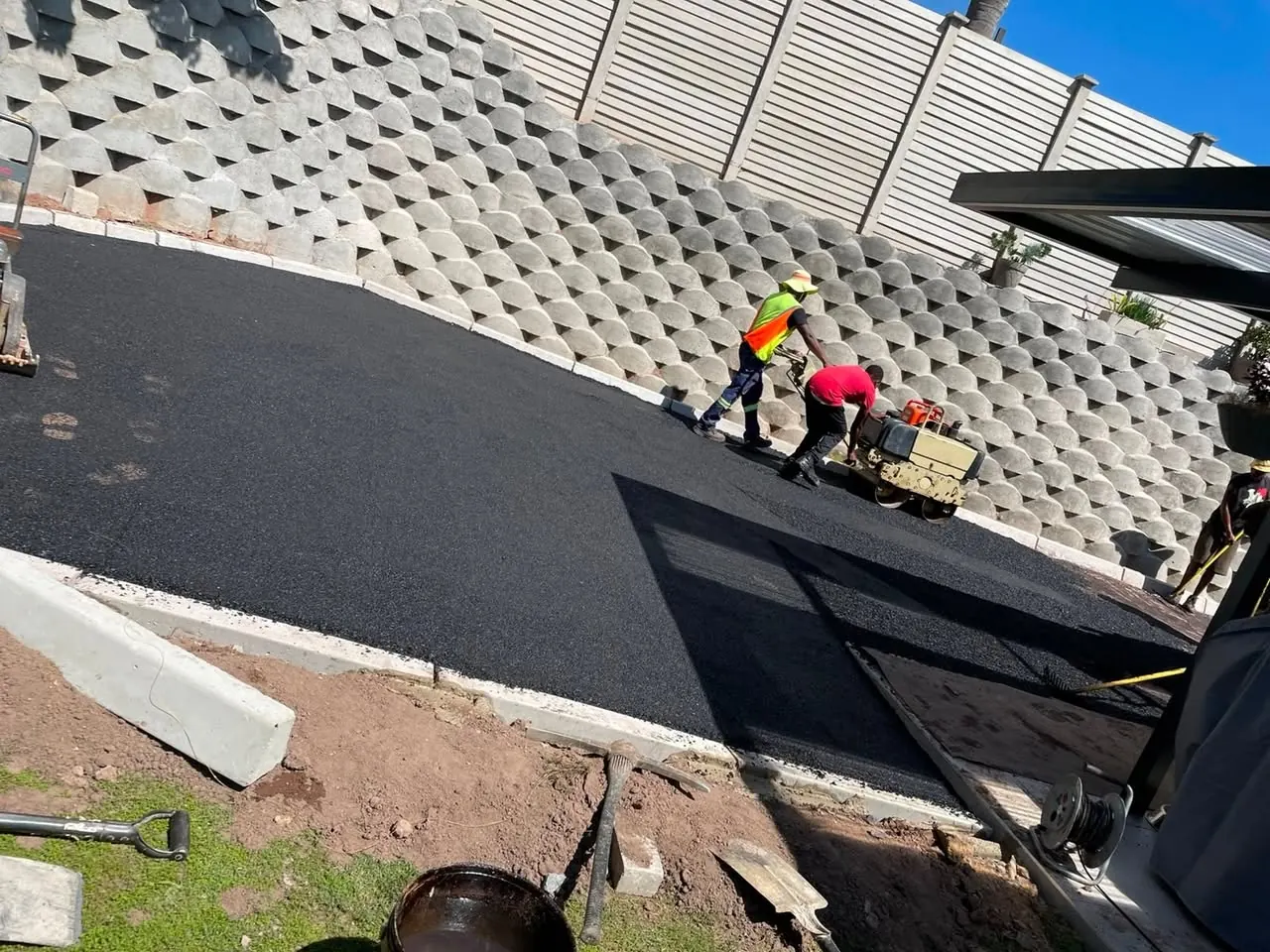
On KwaZulu-Natal's hilly sites, retaining walls make room for driveways, parking and gardens. When they fail, it is usually for one of a few predictable reasons, and nearly all of them are about water.
1. Water builds up behind the wall
Saturated soil is far heavier than dry soil and pushes much harder against a wall. After heavy summer rain, a wall without drainage can be carrying a load it was never meant to. A properly built wall has free-draining backfill directly behind the blocks, a geofabric layer to stop soil clogging it, and a subsoil drain at the base to carry water away.
2. A weak foundation
The first course of blocks must sit on a level, compacted foundation. If it is built on loose fill or soft ground, the wall can settle unevenly, lean or bulge.
3. The wall is too high for its design
Segmental block walls rely on their weight and their backward lean into the slope. Above a certain height, or when a driveway, building or other load sits near the top, a simple wall is no longer enough. It needs a design by a registered engineer, which may include reinforcement in the soil behind the wall. Walls like this may also need municipal approval.
4. Run-off over the top
Water pouring over the top of a wall erodes the face and the planting pockets, and finds its way behind the blocks. Directing driveway and roof run-off away from the wall — with channels, kerbs and falls — protects it.
Building the wall and driveway together
Because many walls exist to support a driveway or parking area, it makes sense to plan both at once: levels, drainage and edges are designed as one system. That is how we approach retaining walls alongside driveways.