
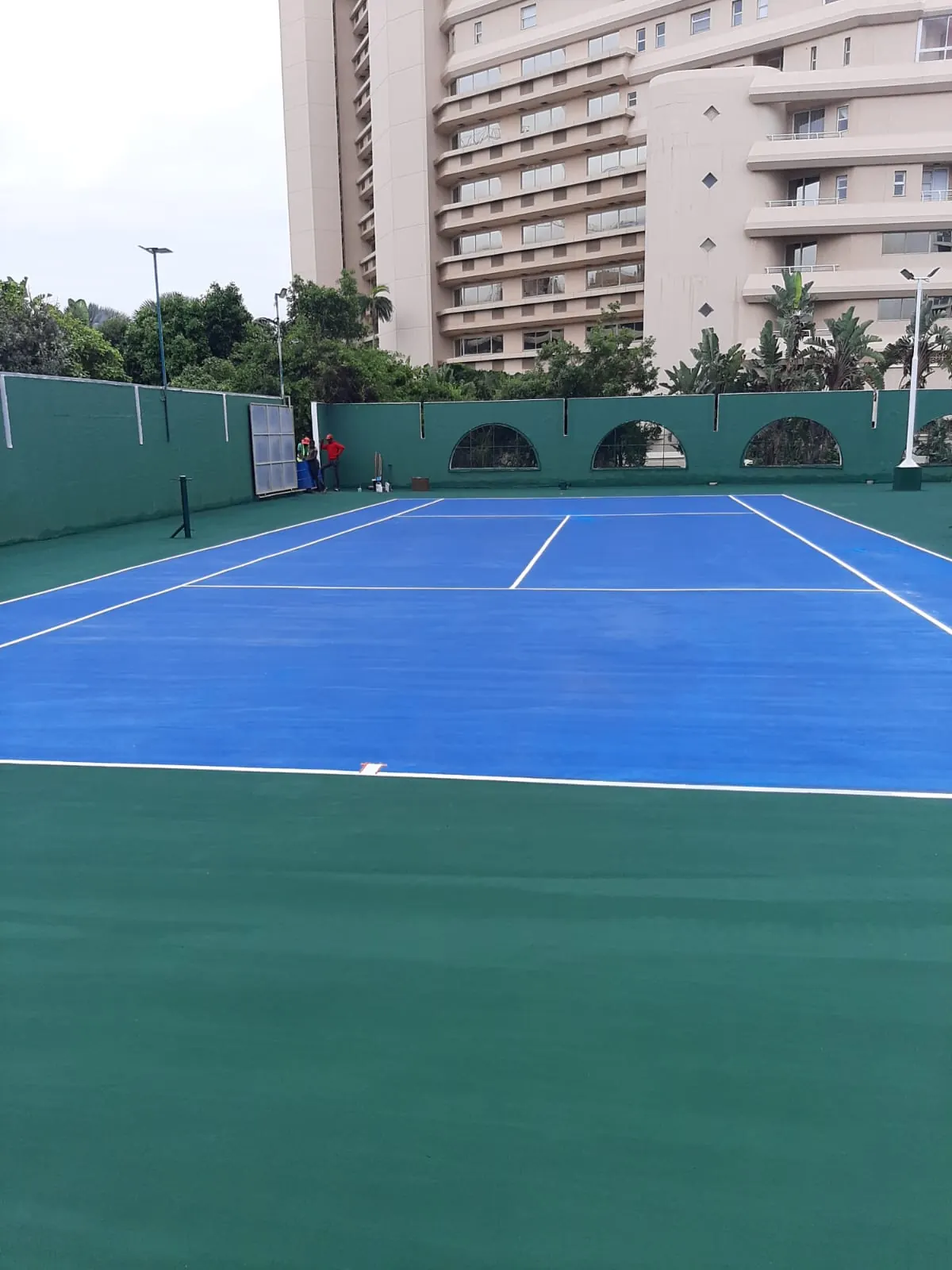
Acrylic-coated courts on an asphalt base are hard-wearing, but sun, rain and constant play take their toll. Resurfacing at the right time restores safe, consistent play for much less than rebuilding the court.
1. The colour has faded
Strong sun breaks down acrylic coatings over time. Fading on its own is cosmetic, but it shows the protective top layer is wearing thin.
2. The surface feels slippery
Acrylic coatings contain fine sand that gives grip. As it wears away, the surface becomes smooth and slippery, especially when damp. This is a safety issue for players.
3. Cracks are appearing
Fine cracks can be filled and coated over. Wide or spreading cracks may mean movement in the base, which needs repairing before resurfacing.
4. Water ponds after rain
Courts are built with a gentle fall so water runs off. Puddles that stay long after rain point to low spots, which can be levelled during resurfacing.
5. The lines are worn
Faded or chipped lines make play and umpiring harder. New lines are part of every resurfacing job, and it is a good time to add a second sport, such as netball or basketball on a tennis court.
What resurfacing involves
- Pressure cleaning to remove dirt, moss and loose coating.
- Filling cracks and correcting low spots.
- Applying resurfacer and acrylic colour coats in layers.
- Setting out and painting the lines.
Schools, clubs and estates can contact us for a quote, or read more about our sports court construction.